Grading and Classification of Maple Sugar: From Light Amber to Dark
The international maple syrup grading system introduced in 2015 standardised a classification framework previously fragmented across producing regions. Understanding the grade categories — and the physical measurements that define them — is relevant both for producers assessing their output and for buyers interpreting product labels.

The International Grading Standard
Prior to 2015, maple syrup was graded under different regional systems in Canada and the United States, using terms like "Grade A", "Grade B", "No. 1 Light", and similar designations that carried different meanings depending on jurisdiction. In 2015, the International Maple Syrup Institute coordinated a unified grading system now adopted by all major producing regions.
Under the current system, all maple syrup sold commercially is classified as Grade A, with four colour and flavour sub-categories. The previous practice of designating darker, more intensely flavoured syrups as "Grade B" and implying inferior quality has been retired.
Grade A Sub-Categories
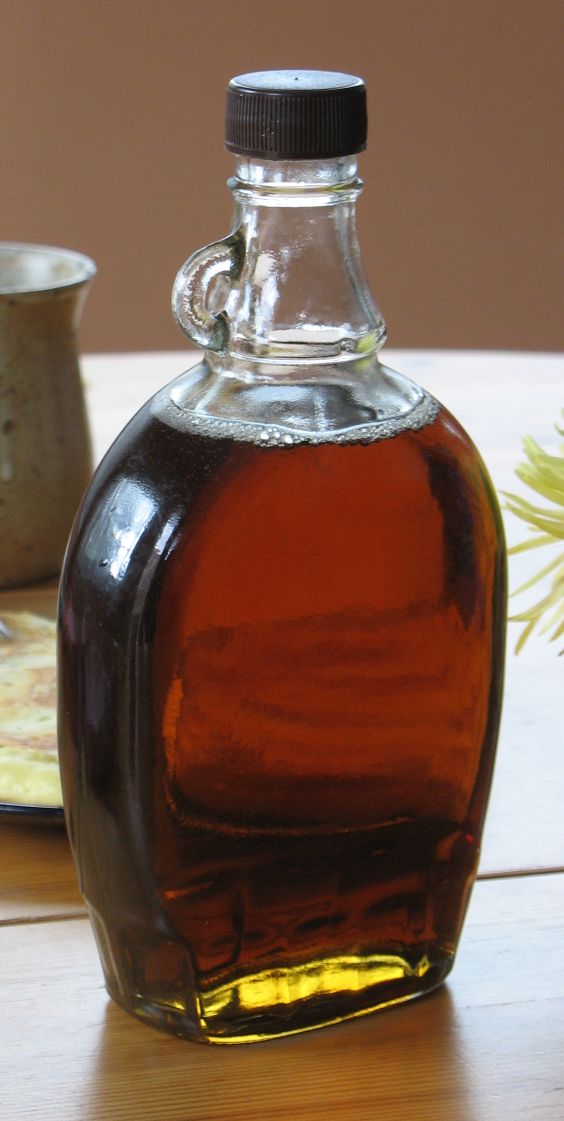
The four sub-categories are defined primarily by light transmittance — the percentage of light that passes through a standard depth of syrup at a specified wavelength. Higher transmittance values indicate lighter colour.
| Grade | Colour Description | Transmittance (%Tc) | Flavour Profile |
|---|---|---|---|
| Grade A Golden | Golden colour | > 75% | Delicate taste |
| Grade A Amber | Amber colour | 25% – 75% | Rich taste |
| Grade A Dark | Dark colour | 10% – 25% | Robust taste |
| Grade A Very Dark | Very dark colour | < 10% | Strong taste |
Transmittance is measured using a spectrophotometer at 560 nm wavelength against a reference standard. Producers who wish to formally grade their syrup must use calibrated equipment, though colour can be estimated informally using glass colour comparators matched to official reference standards.
Factors That Determine Colour and Flavour
The colour of maple syrup develops through Maillard reaction chemistry during evaporation, as well as through the enzymatic and microbial activity that occurs in the sap before and during processing. Several factors consistently influence the final grade:
Season Timing
Sap collected early in the season, when temperatures are colder and microbial activity in the sap is lower, tends to produce lighter, more delicately flavoured syrup. As the season progresses and daytime temperatures rise, chemical changes in the sap — including increased sucrose inversion and elevated amino acid content — result in darker, more intensely flavoured syrup.
Sap Freshness and Processing Speed
Sap held at temperatures above refrigeration levels for extended periods undergoes microbial fermentation that darkens the finished syrup and can introduce off-flavours. Rapid collection and prompt evaporation are consistently associated with lighter grades in producer documentation from North American operations. This relationship is expected to hold for Polish European species, though local data is limited.
Evaporator Design and Cleanliness
Caramelisation of residual sugar on evaporator surfaces adds colour to the syrup. Evaporators that are not cleaned between uses accumulate these residues, progressively darkening subsequent batches. Producers targeting Golden or Amber grades typically clean their equipment more frequently during the season than those producing Dark or Very Dark syrup for industrial or baking applications.
Density Requirements
Regardless of colour grade, all maple syrup sold commercially must meet a minimum density requirement. The standard is 66.0° Brix, corresponding to a density of approximately 1.324 g/mL at 20°C. Syrup below this threshold has a shorter shelf life due to higher water activity and is at risk of fermentation in sealed containers.
Brix and Water Activity
At 66° Brix, the water activity of maple syrup is sufficiently low to inhibit most spoilage organisms. Syrup slightly above 67° Brix can develop sugar crystallisation over time, particularly if stored in cold conditions. The practical target range for finished syrup is 66.0–67.0° Brix, verified by calibrated hydrometer or digital refractometer.
Granulated Maple Sugar
Granulated maple sugar is produced by heating maple syrup above the finished syrup point and agitating it as it cools, causing the sucrose to crystallise into a dry, granular form. The resulting product contains approximately 90–95% sucrose by dry weight.
Classification of Granulated Maple Sugar
There is no single international standard for granulated maple sugar equivalent to the syrup grading system, though the International Maple Syrup Institute has published voluntary guidelines. Classification typically addresses:
- Moisture content: Finished product should contain less than 1.5% moisture to remain free-flowing and shelf-stable
- Colour: Derived from the grade of syrup used in production; lighter syrup yields lighter sugar
- Particle size: Fine, medium, or coarse, depending on processing method and intended use
- Sucrose purity: Documented for commercial buyers, particularly in confectionery and industrial applications
Relevance for Polish Producers
Producers in Poland selling maple products commercially within the EU must comply with applicable food labelling regulations. The term "maple syrup" on labels is regulated under EU foodstuffs legislation, and products must meet the density and purity standards associated with the designation. Informal or hobby production sold directly to consumers at farm stands or farmers' markets operates under different regulatory thresholds but is still subject to general food safety obligations.
Given that European maple species produce sap with broadly similar sugar composition to North American species, the grading system based on transmittance and Brix applies without modification to syrup produced from Polish field maple or Norway maple.
Last updated: June 4, 2026. Grading specifications based on publicly available International Maple Syrup Institute documentation.
References:
— International Maple Syrup Institute Grading Standards: internationalmaple.org
— USDA Maple Syrup Grade Standards: ams.usda.gov
— Images: Wikimedia Commons (CC BY-SA / public domain)